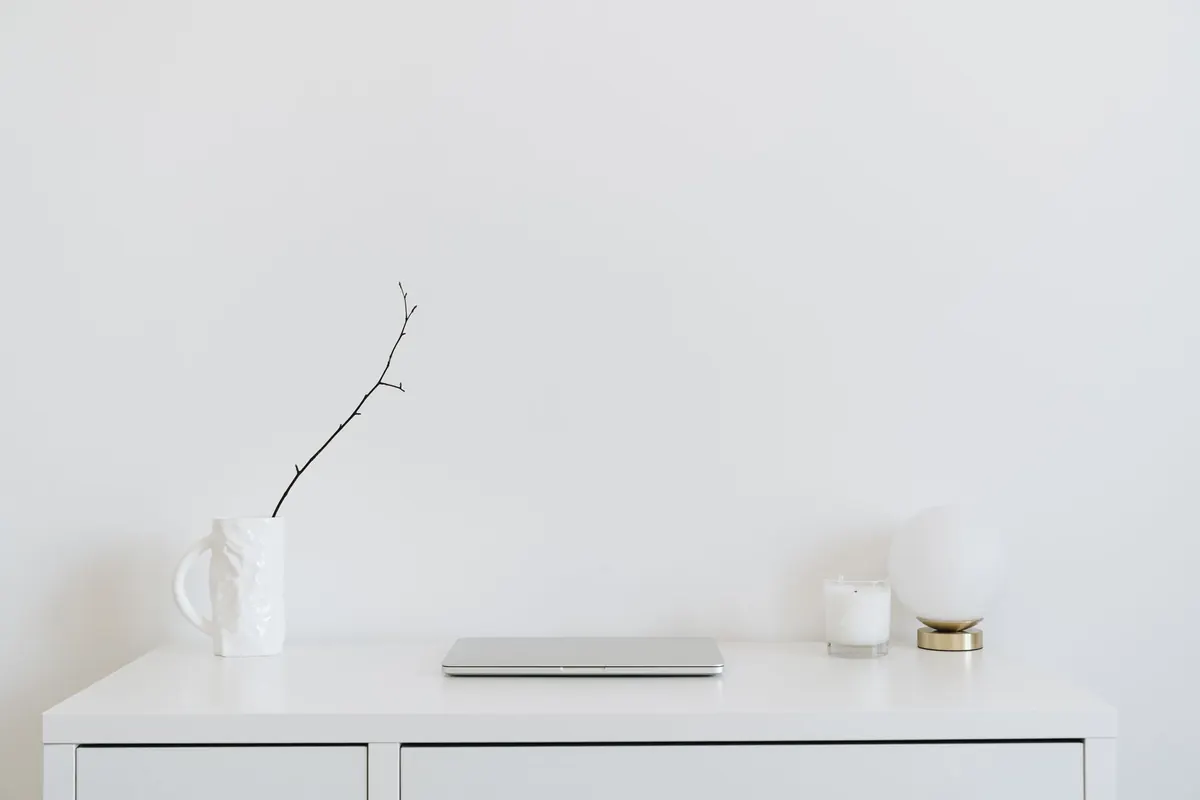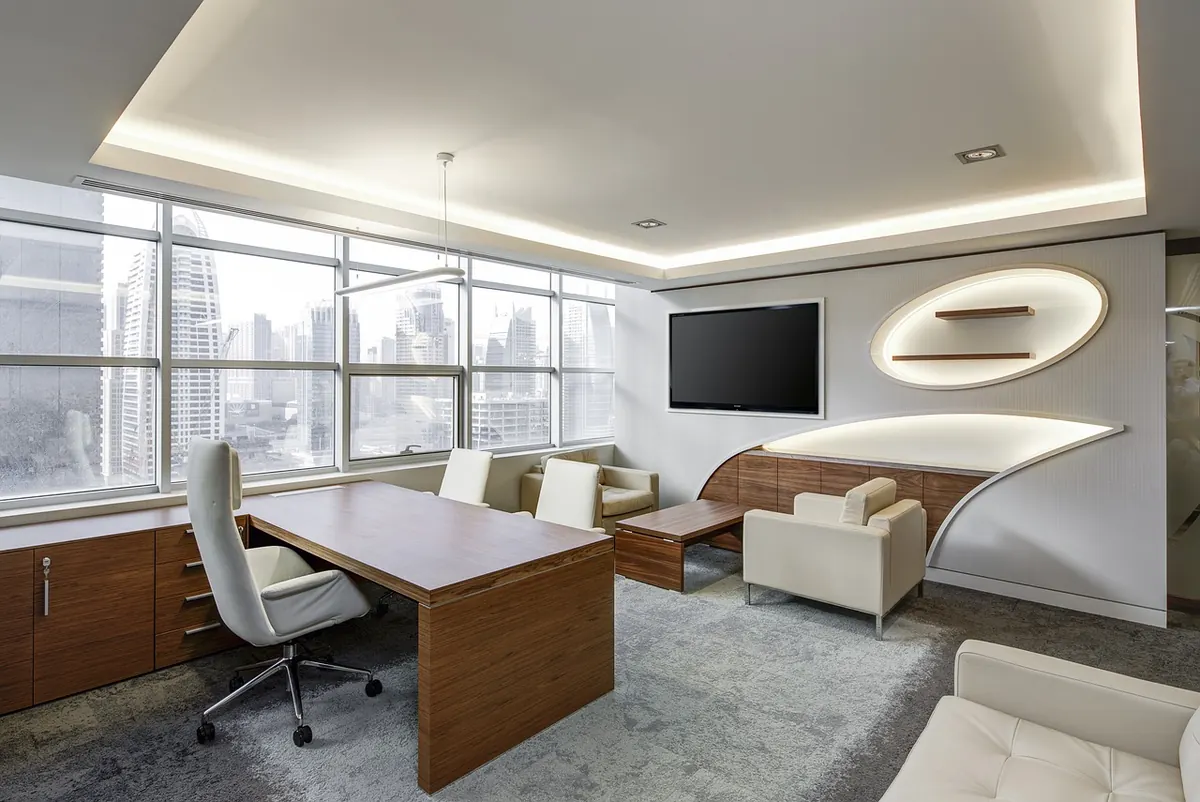
Not everyone has a spare room to hand over to a desk. In a flatshare, a one-bedroom flat or a family home where every room already has a job, the home office has to squeeze in beside the sofa, the bed or the kettle. That's perfectly workable, but it takes more thought than ordering a desk and hoping for the best. The goal is a spot you can set up in two minutes, clear in two minutes, and that doesn't make anyone else feel like they're living in an office.
Work out which room can actually take it
Before you buy anything, walk around with a tape measure and a critical eye. Every room in a shared home offers a different trade-off.
- Lounge. Usually the best light and the most space, but also the busiest room in the evening. A corner or alcove works; the middle of the room does not.
- Bedroom. Quiet and private, which is ideal for calls. The catch is that you never quite leave work behind, and the desk sits beside the place you're meant to relax.
- Kitchen. Hard-wearing surfaces that wipe clean, but steam, splashes and cooking smells are real hazards for a laptop.
- Hallway or landing. Overlooked, often just wide enough for a narrow desk, and away from the television. Check you aren't blocking a doorway or a radiator.
Three things decide it: where the power sockets are, how much natural light the spot gets, and whether you can create any kind of visual or acoustic separation. If a room fails on power, it will fail in daily use. An extension lead can save a spot, but only if it doesn't trail across a walkway. If it fails on light, you can fix it with a decent desk lamp. If it fails on separation, you may still make it work with a screen, a bookshelf or a strict routine, but you will feel the lack of it on every call.
Measure the gap, not just the wall. A desk that is 100cm wide may fit the alcove, but if you need 60cm to pull out a chair and another 60cm for someone to walk past, the real footprint is much larger. Sketch the room on paper and mark doors, radiators, plugs, windows and the route people take to the sofa or the fridge. The best spot is usually the one you can walk away from without asking anyone to move.
Choose a desk that earns its space
In a shared room, the desk has to do more than hold a laptop. It has to look reasonably tidy, fold away or shrink when work is done, and not become a permanent dumping ground. A few shapes work better than others.
- Wall-mounted or floating desks. These leave the floor clear and make a small room feel less cramped. They are ideal if you can drill into a wall and you only need a laptop, a notebook and a mug.
- Drop-leaf or gateleg tables. These give you a full-width desk when you need it and a narrow console when you don't. A second-hand gateleg table can be cheaper and sturdier than a flimsy flat-pack desk.
- Slim console tables. Often 30cm to 40cm deep, they fit behind a sofa or under a window. Add a monitor arm or a laptop riser to make the most of the shallow depth.
- Ladder desks or shelf desks. These combine a desk and storage in one vertical footprint, which is useful in a hallway or a bedroom corner.
If you can't drill, look for a desk with adjustable feet so it sits level on uneven floors, and avoid anything wider than the gap you measured. Castors are a mixed blessing: they make a desk easy to move, but they also make it easy to knock into a wall. Felt pads are quieter.
Make storage part of the furniture
Clutter is what makes a shared-space office feel like an office. If your work things live in three different piles, you will never clear down in two minutes. Give every item a home that belongs in the room even when you are not working.
- One lidded box for cables, notebooks, pens and chargers. Choose a fabric or wooden box that matches the room rather than a plastic crate.
- A magazine file or document tray for papers you cannot recycle yet.
- A small drawer unit on castors that slides under the desk or beside the sofa.
- A hook or basket for headphones, so they don't live on the arm of the chair.
- A lockable cabinet or lockable document bag if you handle confidential paperwork in a shared home.
Label things if other people share the room. A box marked Work — please don't move is less likely to be tidied into the wrong cupboard. The aim is not to hide your work shamefully; it is to make the room feel like a living space first and a workplace second.
Photo: MagicDesk / Pixabay