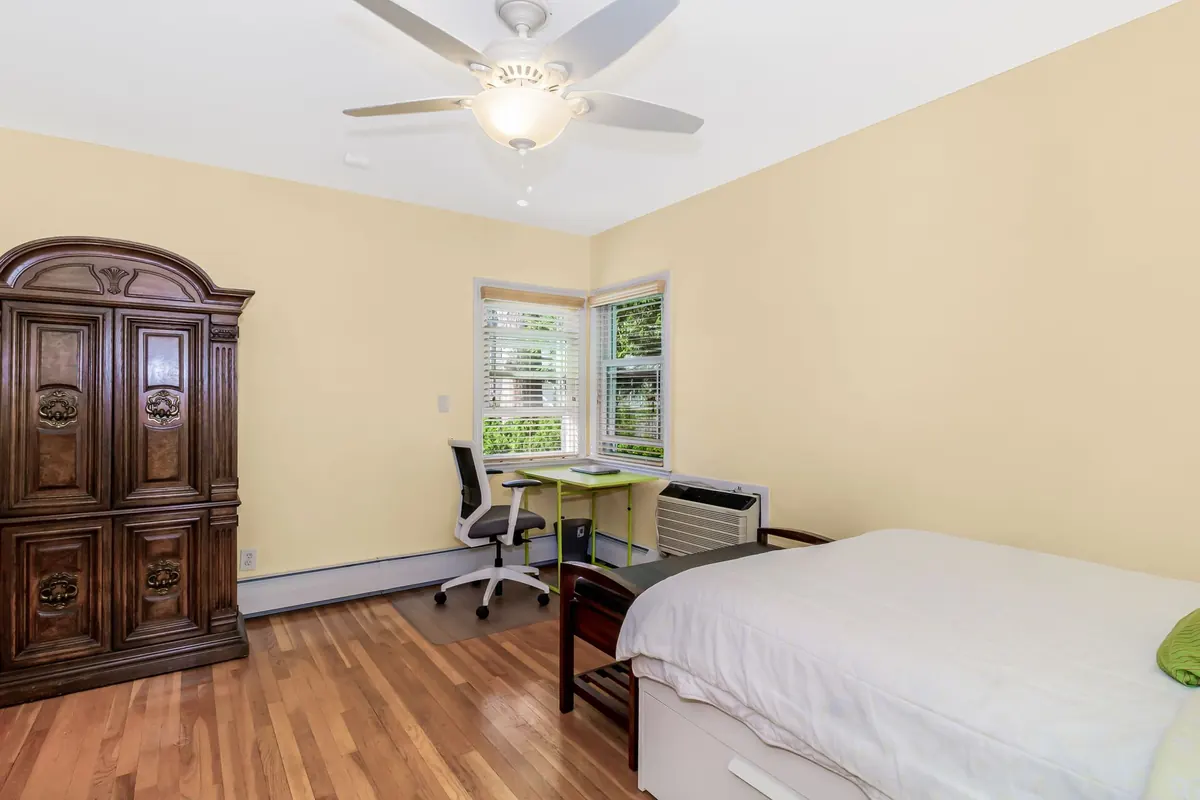
Most spare rooms are asked to do two jobs with one set of furniture, and the result is usually a compromise: a desk with a stack of bed linen behind it, or a bed you can't get to because of the printer. The fix isn't tidier habits. It's choosing storage and folding solutions that make the changeover quick enough that you will actually do it, and arranging the room so neither version looks like it is waiting for the other one to leave.
Work out which room it is most of the time
Start with an honest split. If the desk is used five days a week and the bed is needed for a handful of nights a year, the office is the default and the bed should fold, slide or hide. If guests come for long stretches in summer and the odd weekend in between, the bed can stay out and the desk becomes the thing that tucks away.
The answer shapes everything else: where the bed sits, whether you need a wardrobe, whether the desk faces the window or the wall. Then get the tape measure out. A single mattress is 90cm by 190cm, a small double 120cm by 190cm and a standard double 135cm by 190cm, and each needs clearance on at least one side for getting in and out. Wall beds need clear floor space in front when they are down, plus enough wall height and a solid fixing. Measure before you buy anything, ceiling included.
Furniture that does two jobs
There are four workable routes, and each suits a different balance of use.
- Wall bed (pull-down bed). The best option for floor space, because the bed disappears upwards during the day. It must be fixed to a suitable wall, so follow the manufacturer's guidance or have it installed properly rather than guessing at fixings.
- Daybed. A sofa by day, a single bed at night. Choose one with drawers underneath and your bedding storage problem solves itself. The trade-off is a narrower sleep surface, so it suits one guest rather than two.
- Bed with built-in storage. Fine if the bed stays made up most of the time, but remember that anything stored inside becomes hard to reach once it is dressed. Keep only seasonal items down there.
- Sofa bed. Often the least comfortable option unless you spend properly. If you already own one, a thick mattress topper makes a real difference, but be honest that it will eat floor space when open.
A word on the desk
The desk matters as much as the bed. A deeper top — around 60cm rather than 40cm — gives you room to work and doubles as a dressing table when guests stay. A desk with a drawer or two swallows clutter. A drop-leaf or folding table suits a small room, and a desk on castors can be rolled sideways when the bed needs the space.
Storage that lets you close the office in one move
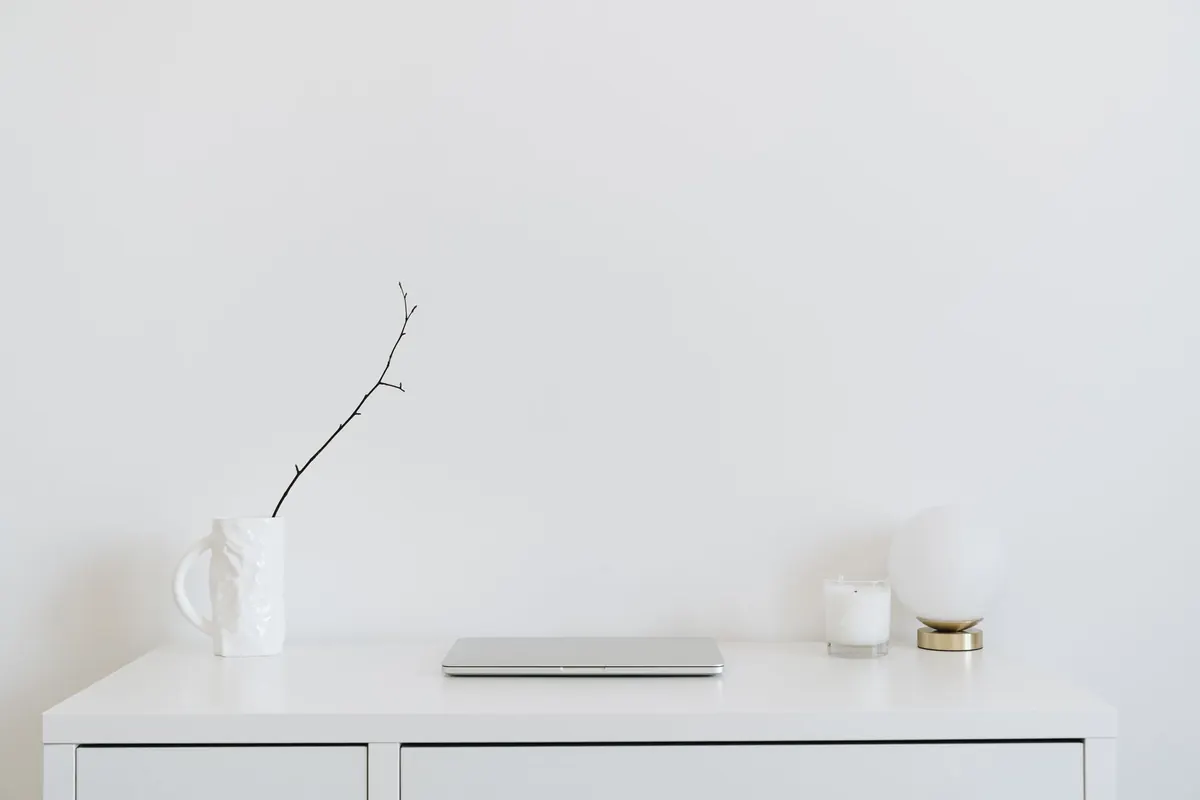
The target is simple: work equipment should be able to vanish behind a door or under a lid in under two minutes. Closed storage always beats open shelving in a room with a bed in it. You want cupboards, lids, drawers and boxes, not a wall of visible ring binders and cables.
These moves make the biggest difference:
- A tall cupboard or wardrobe with a shelf for folders, a drawer for stationery and a rail for guests' clothes.
- A rolling trolley that holds everything on your desk — charger, notebook, headset, pens — and slides into the cupboard at the end of the day. You set up once in the morning and clear once at night.
- A single lidded box for loose paper. When the lid is on, the pile stops being visible.
- A labelled pouch or tray for chargers and adapters, so nothing gets coiled around the desk legs.
- A monitor arm, so the screen can be pushed flat against the wall rather than sitting in the middle of the room.
A roller blind mounted above a shelving unit is a cheap disguise: pull it down and the whole wall reads as a plain surface. A fabric panel on a simple rail does the same job.
Keep guest bedding where it belongs
One place, always the same place. A zip-up or vacuum bag on top of the wardrobe, a labelled box under the daybed, or the top shelf of the airing cupboard. Inside it: a full set of linen, pillowcases and a spare towel per guest. Refresh it after every stay rather than trusting it straight from the bag, and write the bed size on the outside of the bag. A small detail that saves a lot of frustration at eleven at night.
The ten-minute switchover
Guests arriving at six, you finishing work at half five. An ordered routine turns that into a non-event.
- Clear the desk surface into the drawer, box or trolley.
- Remove mugs, water glasses and anything edible.
- Unplug chargers and wind the cables into the pouch.
- Close cupboard doors and pull down the blind over the shelves.
- Fold the bed down or unfold the daybed, and make it up with linen from the guest bag.
- Put out a warm bedside lamp, a folded towel and a small side table or stool.
- Open the window for ten minutes while you carry the tea things downstairs.
Rehearse it once when nobody is coming. The first attempt takes twenty minutes; after that it is just a habit.
Light, privacy and the small comforts
Plan for two lighting moods. Task lighting for work means a bright desk lamp; guests want something softer, ideally a warm bedside lamp with its own switch so they are not reaching over your keyboard in the dark. If the bed faces the desk, a blind or curtain between them gives guests a sense of privacy and hides your workspace at night. A rug softens the echo that hard floors and desks create together.
The details guests notice: a hook on the back of the door, a mirror, a coaster, somewhere to put a phone, and one shelf that is not allocated to work.
Making both versions feel intentional
Walk in as a guest would. If the room says office with a bed squeezed in, a few deliberate choices fix it: matching storage boxes, one calm colour, art that is not a whiteboard, a proper lamp rather than the spare from the landing. Then test it the other way. On Monday morning, the absence of a made-up bed should make the room feel like a study again, not like a room mid-change.
Decide which version is the default, keep the other one's kit in a single known place, and let the room flip without a full clear-out. If you rent, check your tenancy agreement before fixing anything to a wall; a daybed and a folding desk do most of the same work without a drill.
Photo: EDR MEDIA GROUP / Pexels